
Shopping for new windows means running into a wall of acronyms, U-factor, SHGC, ENERGY STAR, NFRC. Understanding window energy ratings helps you compare products accurately and avoid paying for efficiency claims that don’t hold up. Explore our energy efficient windows page for certified options, or read on for what each rating actually means, and see our full lineup of replacement windows once you’re ready to compare specific models.
Understanding U-Factor & SHGC
Window replacement is a significant investment that can improve your home’s resale value and make it more comfortable to live in. Part of choosing well is understanding energy performance ratings and how they’re calculated.
ENERGY STAR qualified windows use whole-unit U-factor and Solar Heat Gain Coefficient (SHGC) numbers rather than center-of-glass measurements, which reflects the energy efficiency of the entire product, frame included, not just the glass at its midpoint. This distinction matters: a window advertised with an impressive center-of-glass number can still underperform once you account for the frame and edge-of-glass losses. Whole-unit ratings let you compare products side by side accurately and avoid buying a window that isn’t as efficient as it looks on paper. Our professional window installation services ensure those rated numbers actually hold up once installed.
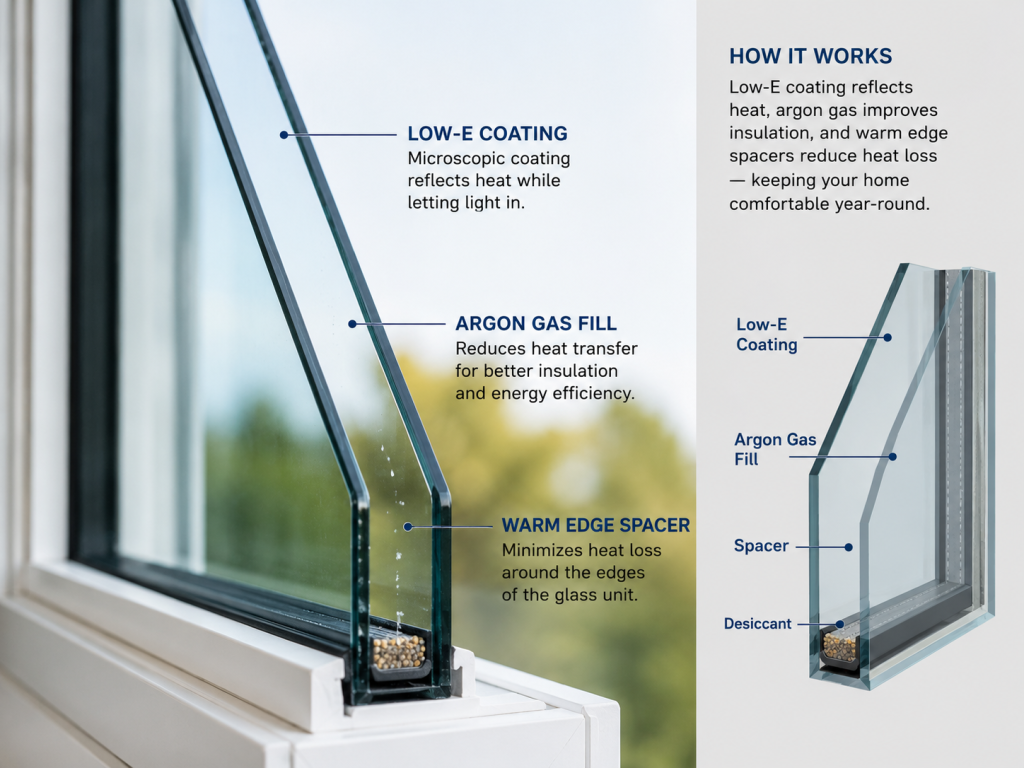
ENERGY STAR Certification
Replacing windows is a significant investment, and choosing energy-efficient, ENERGY STAR certified options is one of the most reliable ways to save money while improving comfort. These windows, doors, and skylights reduce carbon emissions and utility costs by helping keep heat inside during winter and outside during summer. Our vinyl window replacement options in Salt Lake City are available in several ENERGY STAR-certified configurations.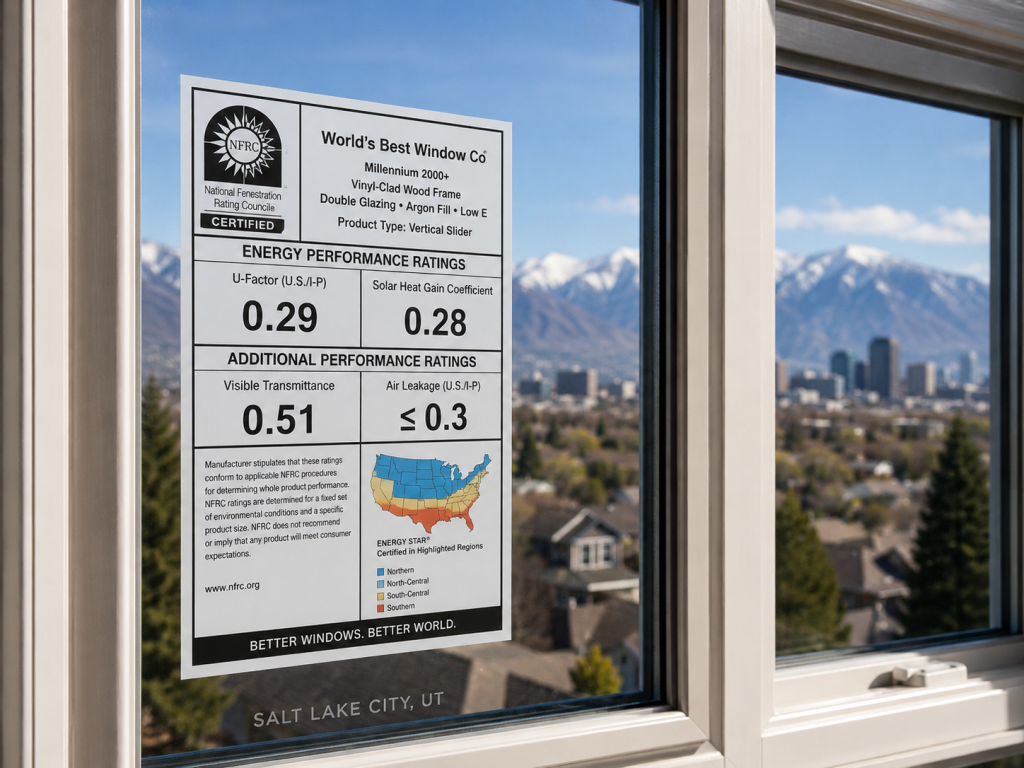
Using the ENERGY STAR Product Finder
The insulated frames and glass in ENERGY STAR qualified windows help prevent drafts, a major source of energy loss, letting your heating and cooling systems work less and reducing wear on the equipment. Use the ENERGY STAR Product Finder to search for windows certified for your specific climate zone rather than relying on general marketing claims.
NFRC Certification Explained
While ENERGY STAR tells you a window meets a certain efficiency bar, the National Fenestration Rating Council (NFRC) is the independent body that actually tests and certifies the U-factor, SHGC, visible transmittance, and air leakage numbers behind that certification.
Every NFRC-certified window carries a label listing these ratings, giving you a standardized way to compare products from different manufacturers on equal footing, rather than relying on each brand’s own marketing language.
Utility Rebates & Tax Credits
Many utilities offer rebates or other incentives for purchasing and installing ENERGY STAR certified windows, doors, and skylights, and it’s worth checking what’s available before you commit to a project.
Utah Rebate Programs
Local programs like Dominion Energy’s ThermWise Weatherization Program and Rocky Mountain Power’s Wattsmart Energy Solutions offer cash incentives for qualifying window upgrades in Utah. Check with your local utility, and look for state and federal tax credits that may also apply to your project.
Choosing an Experienced Installer
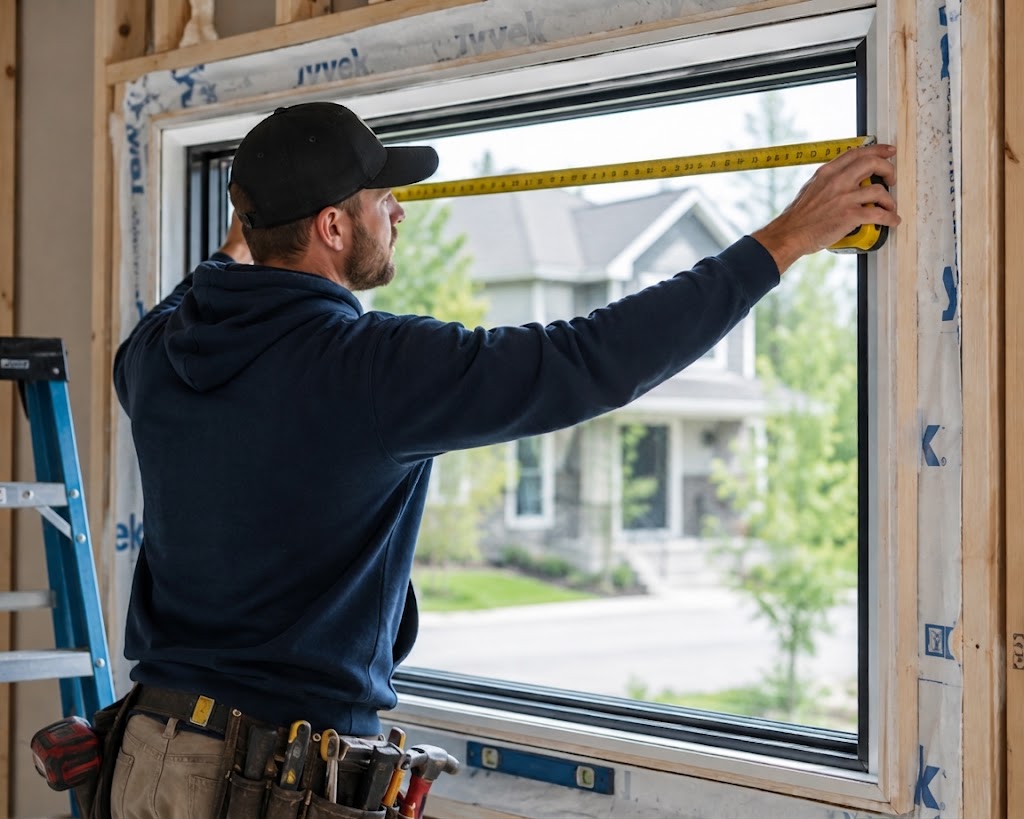
Understanding the ratings is only half the equation, proper installation is what actually delivers the energy performance a window is rated for. Look for a window contractor with real experience and a solid local reputation, one that provides detailed measurements and accurate quotes rather than rough estimates.
Installers who work directly with clients using their own crews, rather than subcontractors, tend to deliver more consistent results and stand more firmly behind their work. Our window replacement services in Salt Lake City teams handle every project in-house from measurement to final walkthrough.
Making Sense of Window Energy Ratings
Between U-factor, SHGC, ENERGY STAR, and NFRC labels, comparing windows can feel more complicated than it needs to be. The short version: look for whole-unit ratings, confirm ENERGY STAR certification for your climate zone, check for available utility rebates, and work with an installer who can explain what all of it means for your specific home.
Have questions about window energy ratings for your home? Schedule a free consultation with our Salt Lake City team for a free consultation.