
What actually makes a vinyl window hold up in Salt Lake City’s climate comes down to vinyl window construction quality, details most buying guides skip over: welded corners, multi-chamber frames, and how the frame handles UV and thermal stress over time.
Not all vinyl windows are built the same, and the difference shows up years down the road, not on the showroom floor. Here’s what to actually look for, and our full lineup of replacement windows meets these construction standards across every style.
Frame Construction: Welded Corners & Multi-Chamber Design
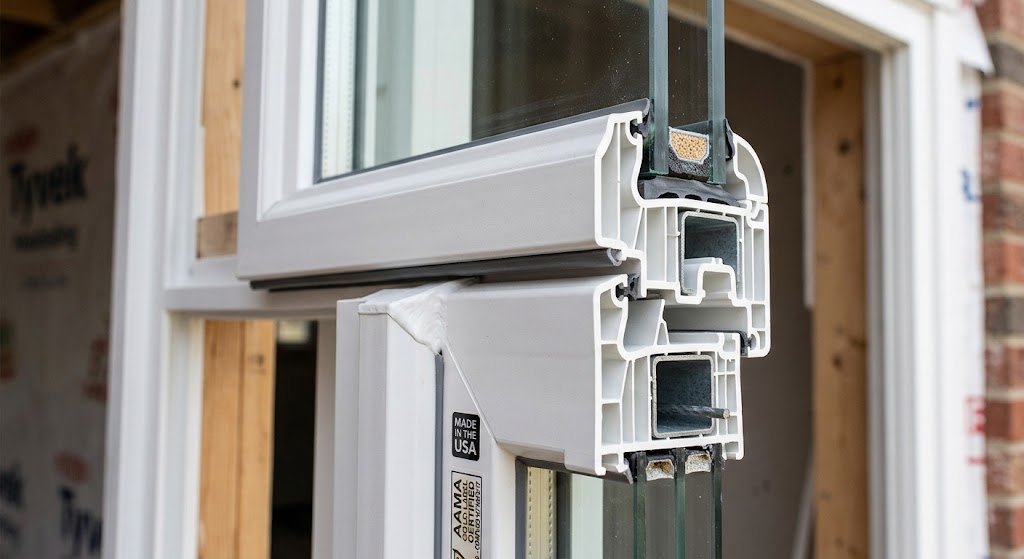
Strong vinyl window construction quality starts at the corners. A window built with fusion-welded corners, rather than mechanically fastened ones, forms a single continuous piece of vinyl at each joint, eliminating a weak point where drafts and moisture can eventually work their way in.
Fusion-Welded vs. Mechanically Fastened Corners
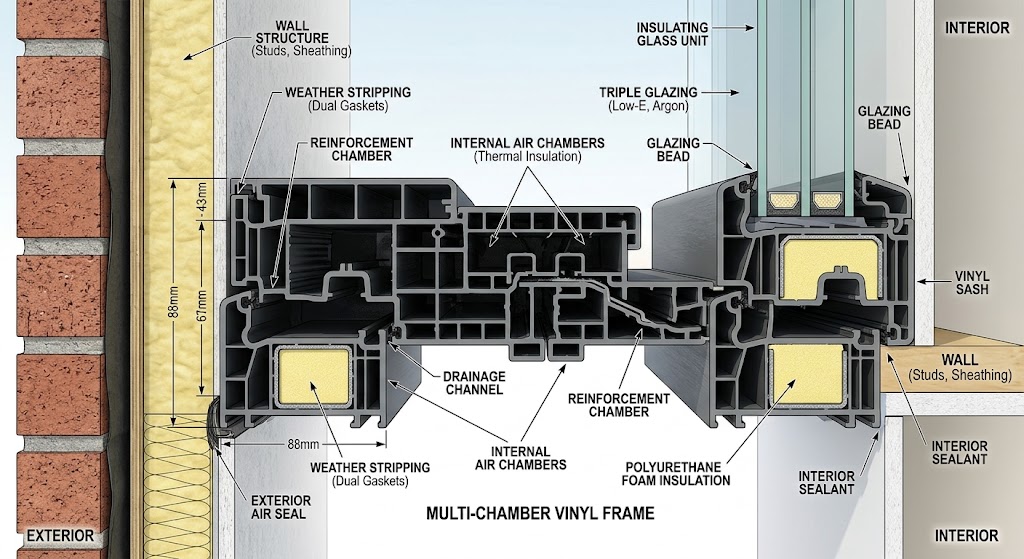
Multi-chamber frame designs add another layer of performance, internal walls within the frame itself create separate air pockets that slow heat transfer more effectively than a simple hollow frame. Reinforced with internal ribbing where needed, this construction approach is backed by standards from the Fenestration and Glazing Industry Alliance (FGIA), the industry body behind window construction and performance testing. Our casement window replacement options are built with this same fusion-welded, multi-chamber construction standard.
UV Resistance & Thermal Performance
Utah’s intense summer sun and wide seasonal temperature swings put real stress on window materials. Well-built vinyl doesn’t soften or warp in high heat, and it resists the surface breakdown that lower-grade vinyl can develop from years of UV exposure.
Minimal thermal transfer through the frame itself is a direct result of construction quality, not just the glass package. A frame that expands and contracts unevenly with temperature swings will eventually loosen its seals, undercutting whatever energy rating the window started with.
Reinforced Meeting Rails for Durability
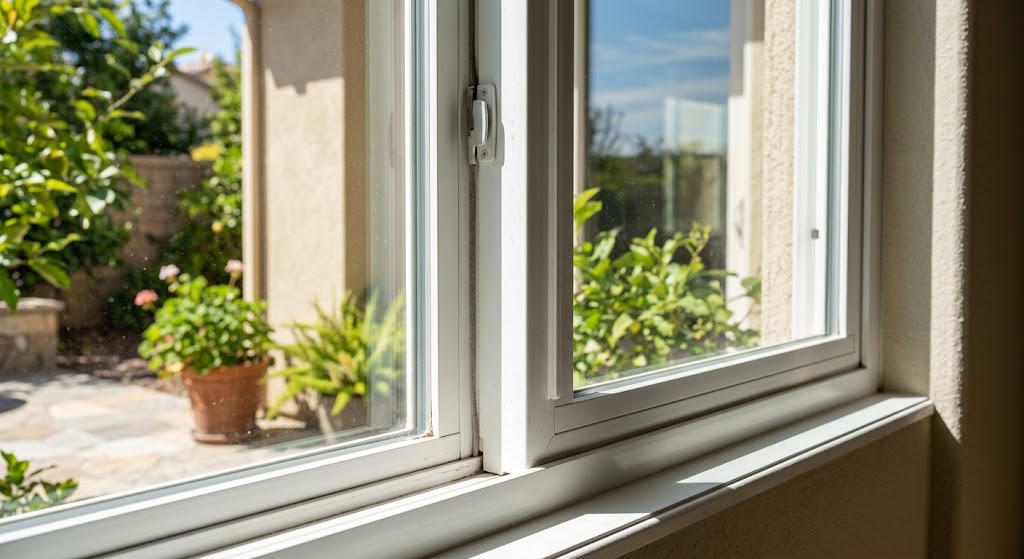
The meeting rail, where the top and bottom sashes meet on a double hung window, is one of the most stressed points on the entire unit, opened and closed repeatedly over the life of the window.
Reinforced meeting rails hold their shape and seal properly year after year, rather than warping or developing gaps that let air and moisture through. This detail matters just as much on sliding and casement styles, wherever two frame sections meet and need to seal tightly against each other. Our professional window installation services team can walk you through the construction details of the specific styles you’re considering.
How Construction Quality Affects Energy Efficiency
A window’s energy rating only tells part of the story. Construction quality is what determines whether that rating actually holds up in practice.
Multi-chamber frames paired with double or triple-pane glass and low-E coatings work together to reduce energy loss, but only if the frame itself is built to hold its shape and seal tightly over time. A poorly constructed frame can undercut an otherwise well-rated window, letting heat and cool air escape at the joints even with premium glass installed. Explore our energy-efficient window solutions page to compare certified options.
Choosing a Well-Built Vinyl Window
Strong vinyl window construction quality comes down to a handful of details you can ask about directly: fusion-welded corners, multi-chamber frame design, reinforced meeting rails, and UV-stable material. For a broader look at vinyl windows generally, including cost, styles, and maintenance, see our Vinyl Windows Salt Lake City guide.
Ready to invest in well-built vinyl windows? Schedule a free consultation with our Salt Lake City team for a free quote.