
Impact-resistant windows are engineered to withstand flying debris without shattering, a security and safety upgrade most homeowners don’t think about until they’re comparing window specs. Here’s what to know, along with the performance numbers worth checking on any replacement window purchase.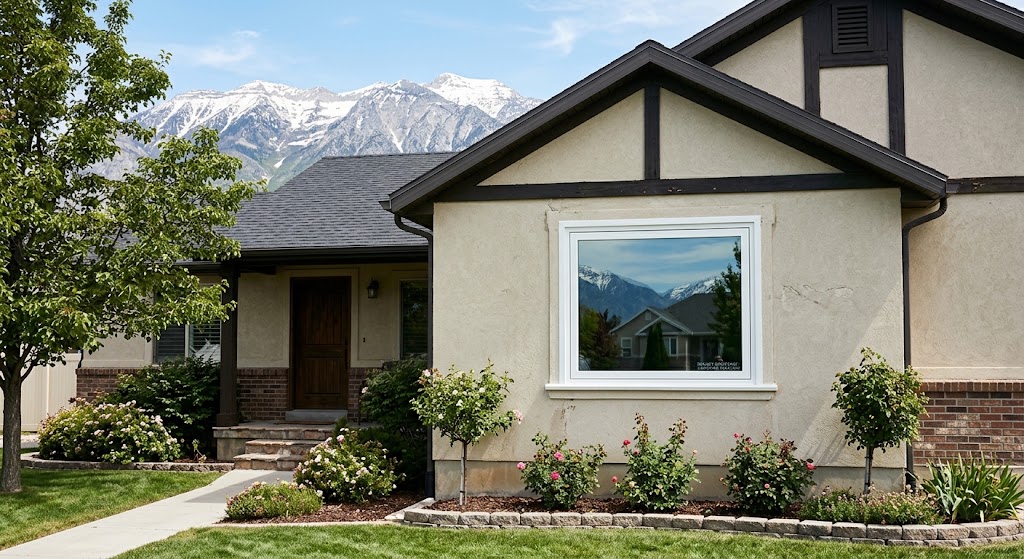
What Are Impact-Resistant Windows?
Impact-resistant windows use laminated glass, typically two panes bonded together with a durable interlayer, so that even if the outer pane cracks under impact, the window stays intact rather than shattering into dangerous shards. Legitimate impact-resistant products are tested against standards set by ASTM International, including impact and cyclic pressure tests such as ASTM E1996 and E1886.
Beyond storm and debris protection, this same laminated construction also happens to make forced entry significantly harder, a dual benefit that’s worth knowing about even outside hurricane-prone regions.
Security & Safety Benefits
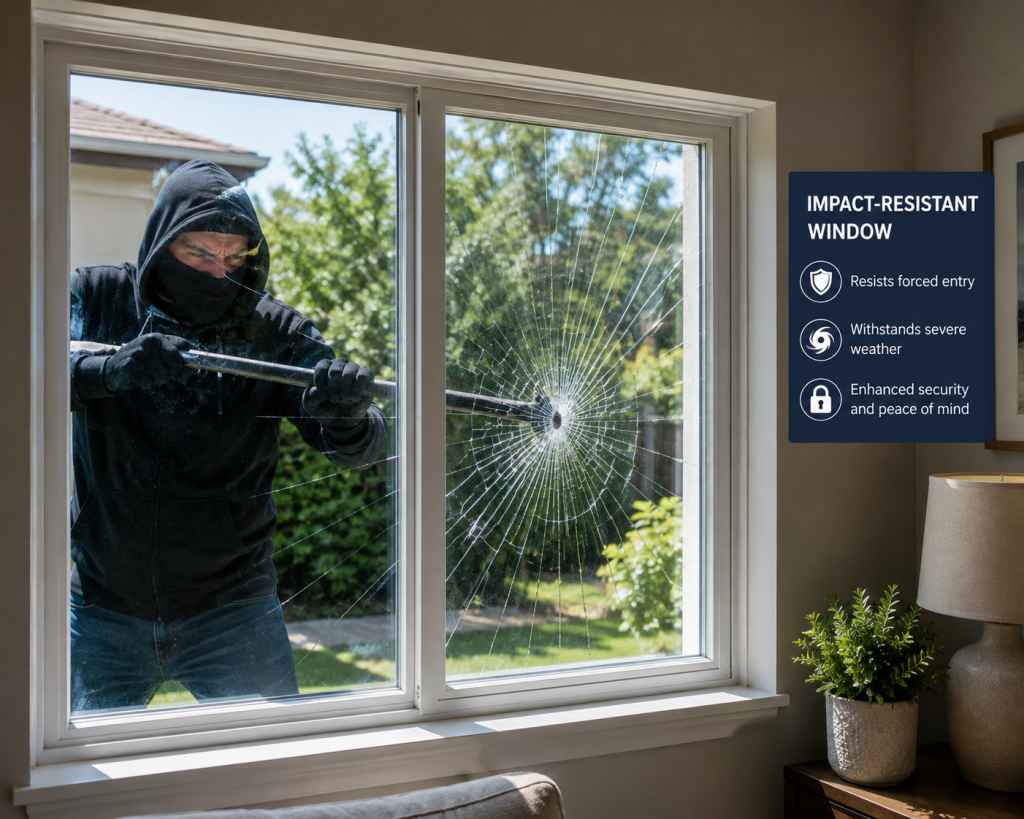
Because impact-resistant glass resists shattering, it’s also far more difficult to break through quickly, an intruder trying to force entry faces a much tougher barrier than standard single-pane glass. That extra layer of resistance can be a meaningful deterrent on its own, the same principle behind our front entry door replacement options, which use similarly reinforced materials.
The laminated construction also holds together even when cracked, which matters for household safety too, reducing the risk of sharp glass fragments from accidental impacts, whether that’s a stray baseball or a more serious structural event.
Energy Performance: U-Factor and SHGC Targets for Utah
Impact-resistant glass doesn’t have to come at the expense of energy performance. Look for a whole-unit U-factor under 0.27 and a Solar Heat Gain Coefficient (SHGC) under 0.30, targets that suit Utah’s mixed climate by minimizing both winter heat loss and summer heat gain.
U-Factor & SHGC Targets for Utah’s Climate
These numbers matter more than general marketing claims like “energy efficient,” since they’re standardized, third-party tested measurements you can compare directly across brands. A window meeting both targets will help reduce strain on your HVAC system and keep utility bills more predictable through Utah’s hot summers and cold winters. Explore our energy efficient windows page to see certified options, or our Window Energy Ratings Explained guide for a deeper look at how these ratings work.
Choosing the Right Glass Package
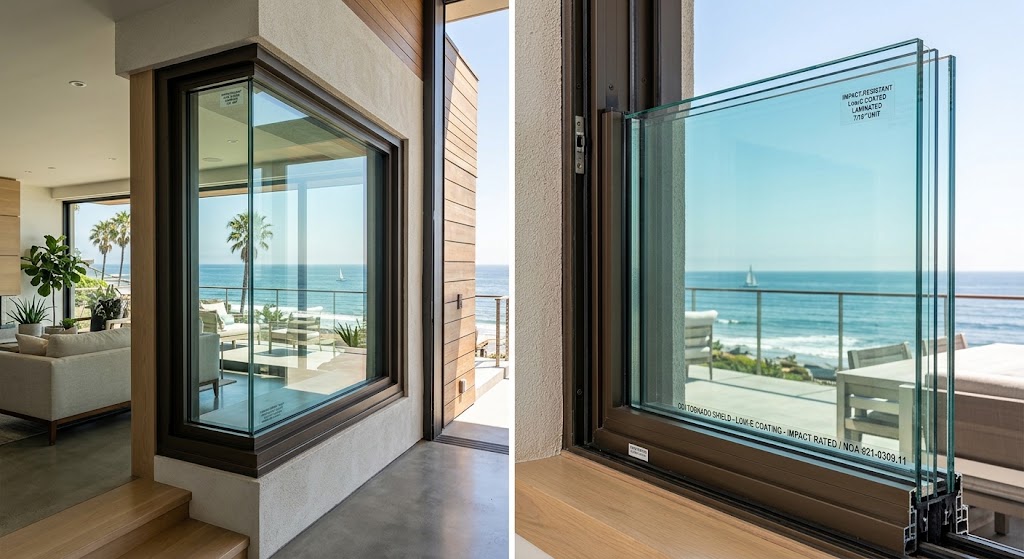
Impact-resistant windows are available with the same energy-enhancing features as standard windows, low-E coatings, insulating gas fills like argon or krypton, and a range of frame materials to match your home’s style.
When comparing options, ask specifically whether the impact-resistant glazing has been tested to the ASTM standards mentioned above, not just described as “durable” or “shatter-resistant” in marketing copy. Our professional window installation team can walk you through glass package options for your home. For a quick reference on what else to check when shopping, see our ENERGY STAR Window Shopping Checklist.
Is Impact-Resistant Glass Right for Your Home?
Impact-resistant windows offer a genuine combination of security and energy performance, and the added durability can be worth it even outside storm-prone climates. Whether it’s the right call for your home depends on your priorities, security, noise reduction, and long-term durability all factor in alongside cost.
Curious whether impact-resistant windows make sense for your home? Contact Salt Lake City Windows and Doors for a free consultation.