
ENERGY STAR climate zones aren’t a one-size-fits-all label, a window certified for one region isn’t necessarily optimized for another. Here’s what the zones mean and how they affect which glass package actually makes sense for your home. Our energy-efficient window solutions are matched to Utah’s specific climate zone requirements.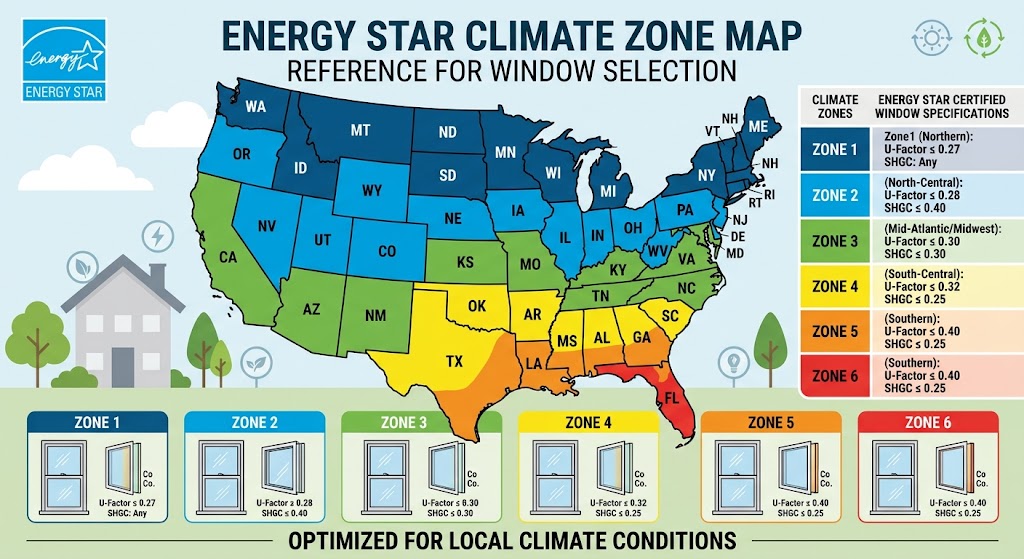
What Are ENERGY STAR Climate Zones?
ENERGY STAR divides the country into climate zones, Northern, North-Central, South-Central, and Southern, each with different certification requirements based on the dominant heating and cooling needs of that region. A window that easily qualifies in one zone might not meet the standard in another, since the performance priorities shift depending on whether a region deals more with winter heat loss or summer heat gain.
This is why “ENERGY STAR certified” alone doesn’t tell the whole story, it’s worth confirming a window is certified specifically for your zone, not just certified somewhere.
Which Zone Is Salt Lake City In?
Salt Lake City falls within the North-Central climate zone, which accounts for a genuine mix of cold winters and hot summers rather than one dominant season. This matters because North-Central zone requirements balance both a low U-factor (for winter heat retention) and a reasonable Solar Heat Gain Coefficient (SHGC), rather than optimizing heavily for just one or the other the way a purely Northern or Southern zone certification might. Our full lineup of replacement windows lists these ratings for every model so you can compare directly, and our vinyl window replacement options in Salt Lake City are a popular, budget-friendly way to access this balanced performance.
How Climate Zone Affects Glass Package Selection
In a colder Northern zone, certification standards lean hard on minimizing U-factor, prioritizing heat retention above all else. In a hot Southern zone, standards instead emphasize a low SHGC, minimizing solar heat gain to reduce air conditioning load. A North-Central zone glass package needs to do a reasonable job at both, since the region swings between the two demands seasonally.
This is part of why a window shopped from a national retailer without regional glass package options can underperform once installed in Utah, even if it’s technically ENERGY STAR certified somewhere in the country. For the underlying ratings themselves, see our Window Energy Ratings Explained guide.
Choosing the Right Package for Utah’s Climate
When comparing window options, ask specifically whether the glass package is certified for the North-Central zone, or ask for the specific U-factor and SHGC numbers rather than relying on a general “ENERGY STAR” label. Our ENERGY STAR Window Shopping Checklist covers the fuller list of what to verify before buying, and our Energy Efficient Windows Utah guide covers materials and rebate programs specific to this region.
Getting the Right ENERGY STAR Package for Your Zone
A window’s ENERGY STAR label only tells part of the story, the specific glass package behind that certification needs to match Salt Lake City’s North-Central climate zone to actually deliver the performance you’re paying for, a result that depends just as much on our professional window installation services as on the glass package itself.
Curious whether your windows are matched to the right climate zone package? Schedule a free consultation with our Salt Lake City team for a free quote. You can also check out our business profile and reviews from other Salt Lake City homeowners.