
Aluminum-clad wood windows combine two materials that don’t usually go together, a warm wood interior and a durable aluminum exterior, each doing the job it’s best suited for. Our full lineup of replacement windows includes aluminum-clad wood options alongside our standard vinyl and fiberglass lines.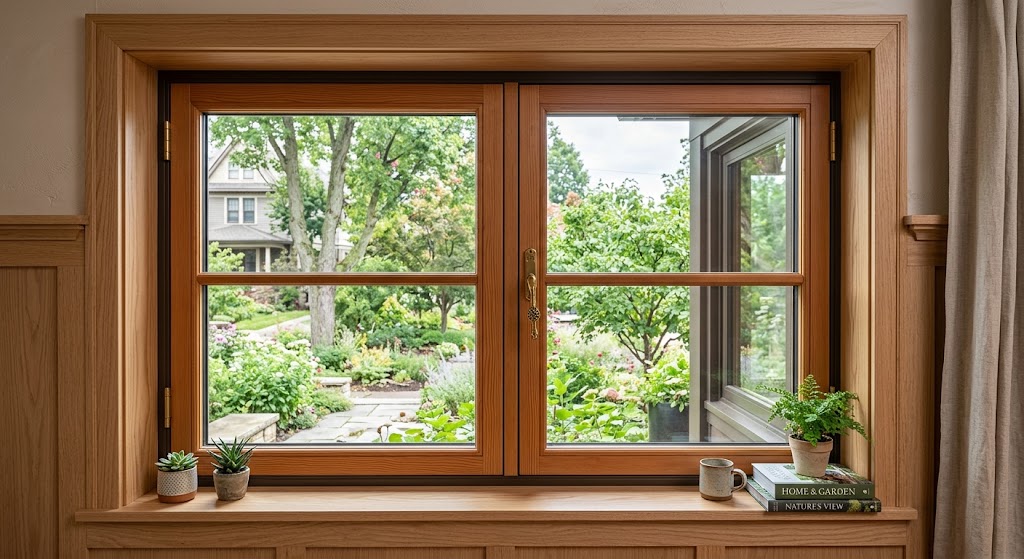
What Are Aluminum-Clad Wood Windows?
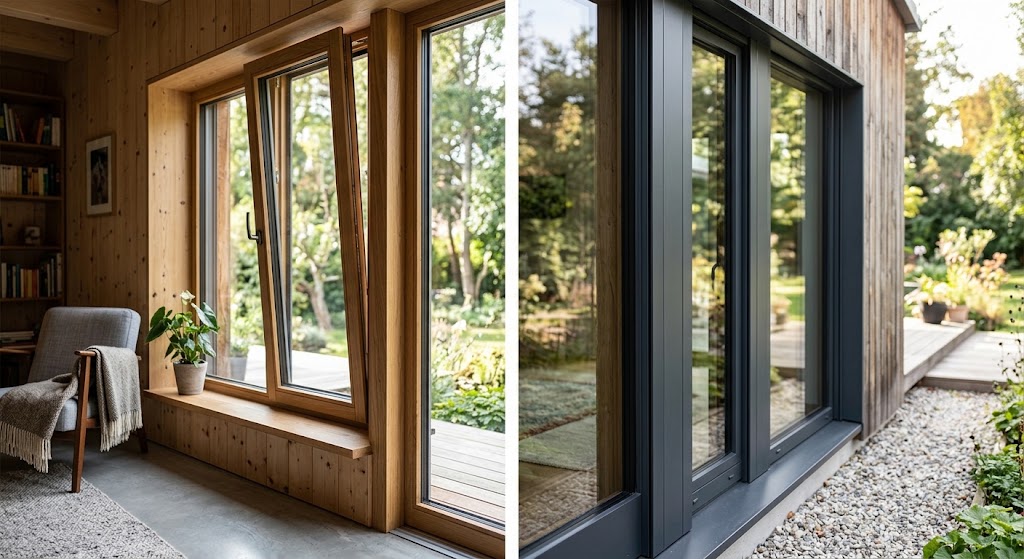
An aluminum-clad wood window uses a solid wood frame on the interior, finished and stained however you’d like to match your home’s interior style, with a layer of aluminum applied to the exterior side of the frame. Rather than choosing between wood’s natural warmth and aluminum’s weather resistance, a clad window is built to deliver both at once, one material facing into the home, the other facing the elements.
This construction differs from a fully solid wood window, which is wood on both sides, and from a fully aluminum or vinyl window, which lacks the natural wood character on the interior. Our double hung window replacement options are commonly available in this aluminum-clad configuration.
Interior Wood Warmth, Exterior Metal Durability
On the interior, the wood surface brings the warmth, grain texture, and traditional character that many homeowners want, especially in living spaces where the window is a visible design element. On the exterior, the aluminum cladding takes the brunt of weather exposure, resisting UV degradation, moisture, and the extreme temperature swings Salt Lake City sees across its seasons, protection an exposed wood exterior can’t match without significant upkeep. Our energy-efficient window solutions cover how frame material affects overall thermal performance.
For a look at how wood and aluminum perform as standalone options rather than combined, see our Aluminum vs. Wood Windows: Energy Efficiency Compared guide.
Maintenance Compared to Solid Wood
A fully solid wood window requires regular repainting or restaining on the exterior to prevent moisture damage and UV degradation, ongoing maintenance that adds up over the life of the window. Because an aluminum-clad window’s exterior is metal rather than exposed wood, it largely eliminates that exterior maintenance burden while still preserving the wood look on the interior side, where it’s protected from weather exposure entirely.
Some manufacturers treat the interior wood with a protective process to further extend its life and resist warping or rot, worth asking about specifically when comparing products. Our JELD-WEN AuraLast Wood Protection guide covers one example of this kind of treated-wood technology.
Where Clad Windows Make the Most Sense
Aluminum-clad wood windows tend to make the most sense for homeowners who want a genuine wood interior look without the higher ongoing maintenance of a fully wood window, particularly on exterior-facing windows that see significant sun or weather exposure. They’re a strong middle-ground option between a low-maintenance vinyl or aluminum window and a traditional all-wood window that requires more upkeep. Our vinyl window replacement options in Salt Lake City represent the lower-maintenance end of that spectrum, and our Window Styles Guide covers how this hybrid option compares to other frame materials more broadly.
Is an Aluminum-Clad Window Right for Your Home?
If you want the look and feel of real wood on the inside of your home without taking on the exterior maintenance that comes with a fully wood window, aluminum-clad construction is worth serious consideration. It’s a genuine middle path between low-maintenance synthetic frames and traditional wood.
Curious whether aluminum-clad wood windows fit your home? Schedule a free consultation with our Salt Lake City team for a free quote. You can also check out our business profile and reviews from other Salt Lake City homeowners.