
When comparing steel entry doors, steel door gauge is one of the more important, and least explained, specifications on a spec sheet. Here’s what the numbers actually mean. Our front entry door replacement options include steel doors built to the gauge standards that matter most for security and durability.
What Does Steel Gauge Mean?
Gauge refers to the thickness of the steel skin on a steel entry door, and confusingly, lower gauge numbers mean thicker steel. A 20-gauge door has thicker, more substantial steel than a 24-gauge door, even though 20 is a smaller number. This inverted numbering system trips up a lot of homeowners comparing quotes, so it’s worth double-checking which direction is “better” before assuming a bigger number means a stronger door.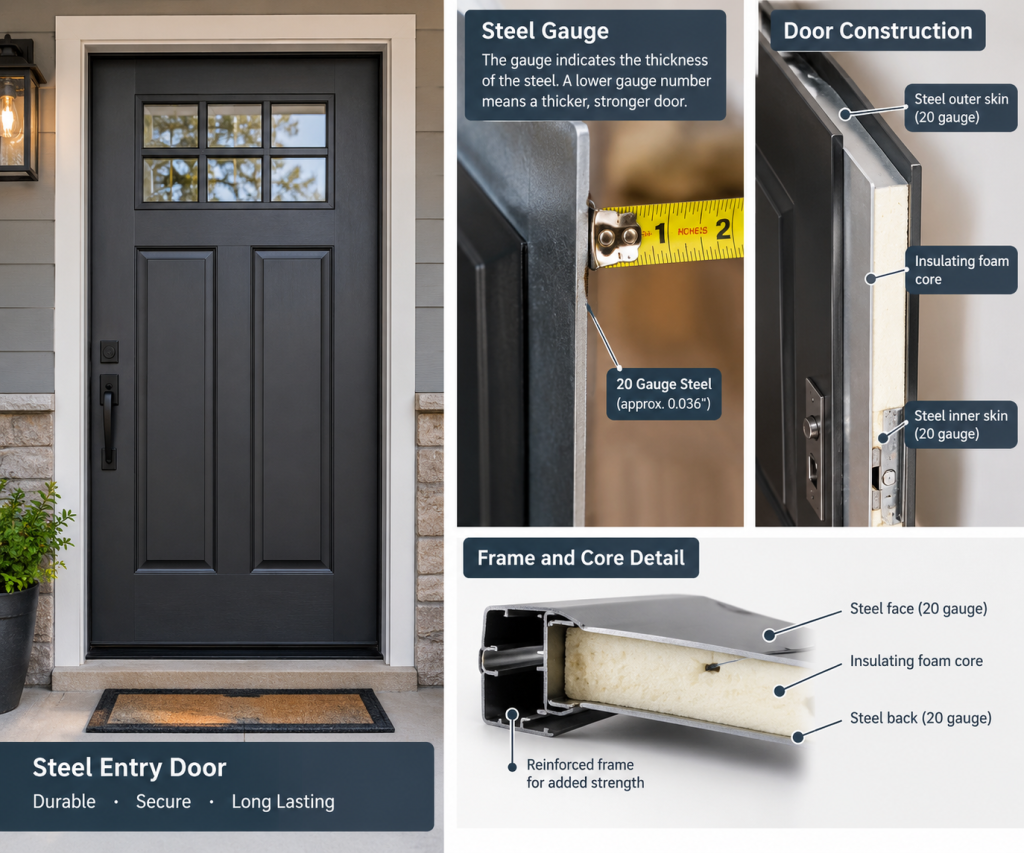
Common Gauge Options for Entry Doors
Residential steel entry doors are commonly available in 20-gauge, 22-gauge, and 24-gauge options, with 20-gauge representing the thicker, more premium end of that range and 24-gauge the lighter, more budget-friendly end. Commercial steel doors sometimes use even heavier gauges for higher-traffic or higher-security applications, though that’s less common in a residential context.
How Gauge Affects Dent Resistance & Durability
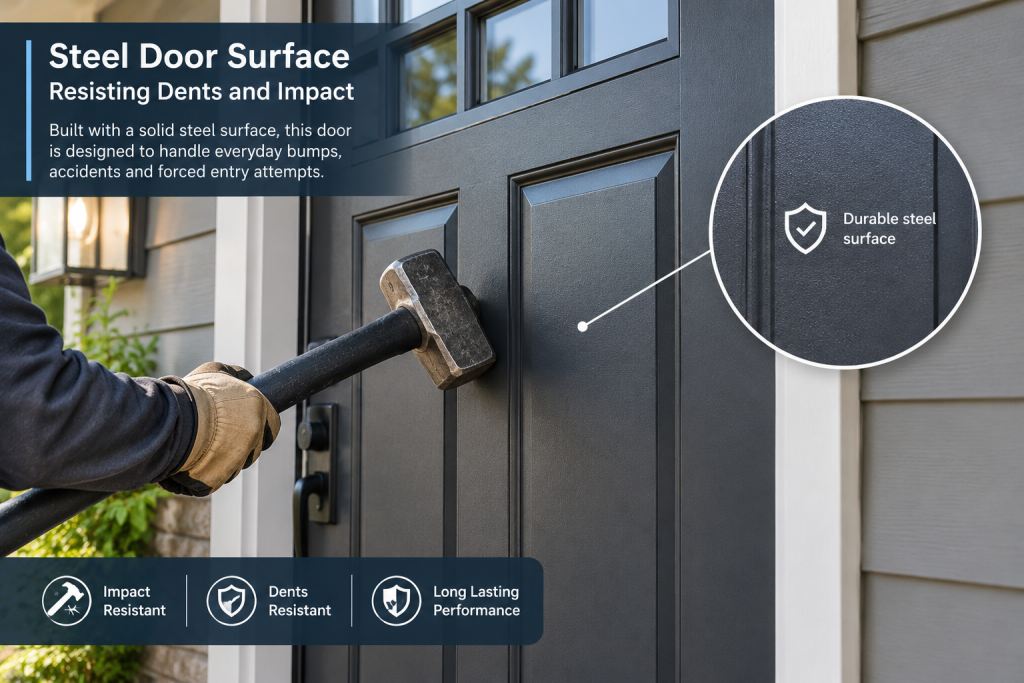
Thicker steel (a lower gauge number) resists dents, dings, and general wear better than thinner steel, a genuine practical consideration for a door that sees daily use, weather exposure, and the occasional accidental bump from furniture, packages, or a dropped tool. A 24-gauge door isn’t necessarily flimsy, but it will show wear more readily over time than a 20-gauge door under otherwise identical conditions.
Gauge is separate from the door’s insulated core, foam-filled steel doors get their energy performance primarily from the core material rather than the steel skin thickness itself, so a lighter-gauge door can still perform well energetically even if it’s less dent-resistant. Our energy-efficient window solutions apply this same principle, insulation performance and material durability are separate specs worth evaluating independently.
Balancing Gauge with Other Door Features
Steel gauge is one factor among several worth weighing when choosing an entry door, alongside core insulation, glass options, and hardware quality. A heavier gauge steel skin adds durability and cost, and for a high-traffic entry or an exposed location, that tradeoff is often worth it. For a lower-traffic secondary entrance, a lighter gauge may be a reasonable way to manage cost without a meaningful downside. Our Front Door Security Features guide covers how gauge fits alongside other security-relevant door specifications.
Choosing the Right Steel Gauge for Your Door
When comparing steel door quotes, ask specifically for the gauge number, and remember that a lower number means thicker, more dent-resistant steel. Our Front Door Curb Appeal guide covers how to balance this kind of technical spec against the overall look you want for your entryway.
Curious what steel gauge is right for your entry door? Schedule a free consultation with our Salt Lake City team for a free quote. You can also check out our business profile and reviews from other Salt Lake City homeowners.