
Getting window installation tolerances right, the small gaps left intentionally around a frame, is what allows a window to be leveled, sealed, and adjusted correctly without binding or leaking down the road. Our professional window installation services follow these precise tolerances on every project.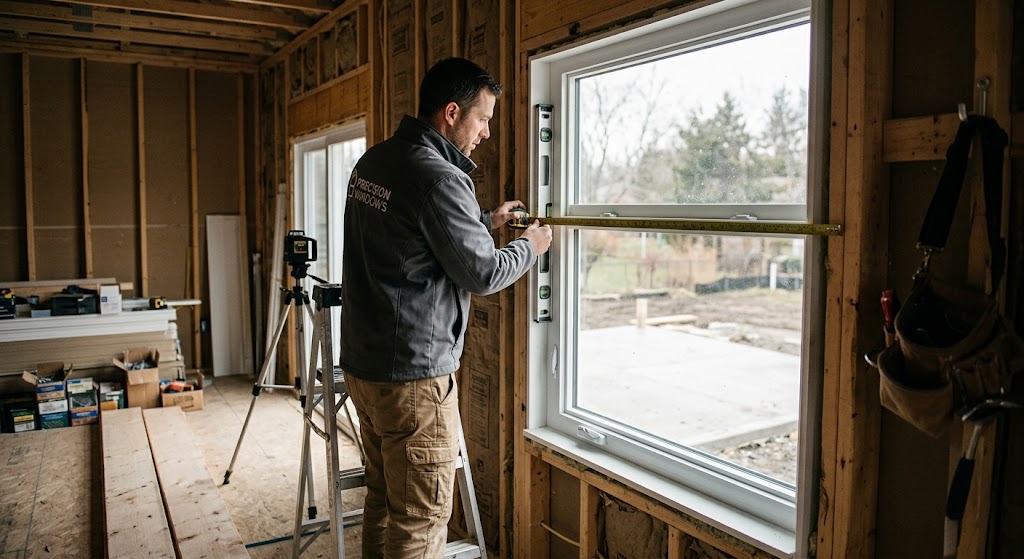
Why Installation Gaps Matter
A window installed with zero gap between the frame and the rough opening has no room for adjustment, if the opening isn’t perfectly square, which is common in older homes, the window will bind, fail to operate smoothly, or develop stress cracks over time. A small, intentional gap, filled correctly, gives the installer room to shim the frame level and square regardless of small imperfections in the opening itself.
Too large a gap, on the other hand, leaves more space to properly seal and insulate, increasing the risk of air leaks and drafts if it isn’t filled correctly. Getting the tolerance right is a balance between the two.
Shim Spacing & Frame Support
Shims are placed at specific intervals around the frame, typically near the corners and at regular spacing along each side, to hold the window plumb, level, and square while it’s fastened in place. Skipping shim points or spacing them too far apart can let a frame flex or sag slightly over time, especially on larger windows carrying more weight.
Proper shim placement is one of the details that separates a professional installation from a rushed one, it takes more time to do correctly but directly affects how well the window operates for years afterward. Our Professional Window Installation guide covers more of what separates a careful installation from an unqualified one.
Material Expansion: Vinyl vs. Wood vs. Fiberglass
Different frame materials expand and contract differently with temperature swings, and installation tolerances need to account for this. Vinyl expands and contracts more than wood or fiberglass across Utah’s wide seasonal temperature range, so vinyl windows typically need a slightly larger installation gap to accommodate that movement without stressing the frame or cracking the surrounding seal. Our Vinyl Window Construction & Weather Performance guide covers more on how vinyl frames handle temperature changes specifically.
Wood and fiberglass frames move less with temperature, allowing for a tighter tolerance, though wood still requires attention to moisture-related expansion rather than just thermal movement. If you’re comparing frame materials for your project, our vinyl window replacement options in Salt Lake City can help you weigh these tradeoffs.

Sealing the Gap Correctly
Once a window is shimmed level and square, the remaining gap needs to be filled with an appropriate insulating material, typically low-expansion foam, rather than left open or over-packed with a rigid material that could push the frame out of alignment as it cures. Exterior caulking and flashing then seal the gap from moisture intrusion on the outside.
This step is where a lot of the actual energy performance of a window installation is determined, a well-built, energy-rated window can still underperform badly if the surrounding gap isn’t sealed correctly. Our energy-efficient window solutions are only as effective as the installation quality behind them.
Getting Installation Tolerances Right
Proper window installation tolerances, correct gap sizing, adequate shim support, and appropriate allowance for material expansion, are what separate a window that performs well for decades from one that develops problems within a year or two. If you’re also planning ahead for a replacement project, our How to Measure for Replacement Windows guide covers the measurement side of getting this right from the start.
Curious whether your existing windows were installed with proper tolerances? Schedule a free consultation with our Salt Lake City team for a free quote.