
Door energy ratings work the same way window ratings do, NFRC labels, U-factor, and solar heat gain coefficient, but they’re rarely explained specifically for doors. Here’s what to look for before you buy, including how these standards apply to our own NFRC-certified door replacement options.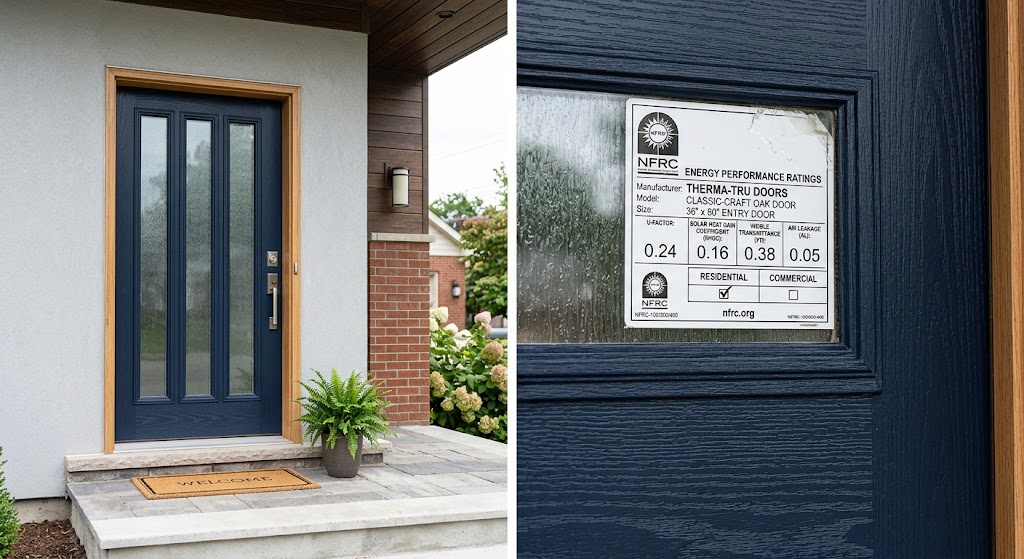
Understanding the NFRC Label for Doors
The National Fenestration Rating Council (NFRC) tests and labels doors the same way it does windows, giving you a standardized way to compare energy performance across different manufacturers and materials. The label lists several ratings side by side, U-factor, solar heat gain coefficient, and sometimes air leakage and visible transmittance, letting you compare doors on real numbers rather than general marketing claims like “energy efficient.”
Not every entry door has a glass component large enough for all these ratings to be meaningful, but for doors with sidelights, a transom, or a significant glass panel, the label is genuinely useful for comparison shopping. If you’re considering a glass-forward entry, it’s worth exploring our entry door installation options to see which styles carry these ratings.
U-Factor: Insulation Value
U-factor measures how well a door resists heat transfer, lower numbers mean better insulation. This depends on both the door’s core material (solid wood, foam-filled steel, or fiberglass) and, where applicable, its glass package. A well-insulated door core matters even more here than on a window, since a door typically makes up a larger, more solid portion of the wall opening than a window does.
Ask specifically for the U-factor rating rather than relying on a general description like “energy efficient,” since that term isn’t standardized the way the rating itself is. If you’d like help comparing numbers across materials, our team can walk you through a personalized U-factor comparison for your specific door choice.
Solar Heat Gain Coefficient for Doors
Solar Heat Gain Coefficient (SHGC) measures how much solar heat passes through a door’s glass components, sidelights, a transom, or decorative glass panels. A lower SHGC blocks more solar heat, useful for south or west-facing entries that get significant direct sun. This rating only applies meaningfully to doors with a genuine glass component, a solid door without glass won’t have a meaningful SHGC rating. This is especially worth factoring in for glass-heavy installations like patio doors, where our team can help you select patio doors with lower solar heat gain for sun-exposed walls.
ENERGY STAR Certification for Doors
ENERGY STAR certified doors meet minimum performance thresholds for both U-factor and, where applicable, SHGC, tested and verified by an accredited independent lab rather than the manufacturer’s own claims. Certified doors may also qualify for federal tax credits or local utility rebates, worth checking before finalizing your purchase. Our Professional Door Installation guide covers why proper installation matters just as much as the rating itself, since a poorly sealed door can undercut even a well-rated one.
Reading Door Energy Labels Before You Buy
Whether you’re comparing a solid entry door or one with sidelights and a transom, checking the actual NFRC-rated U-factor and SHGC numbers gives you a much clearer picture than general marketing language. If you’re also comparing window ratings for the same project, our Window Energy Ratings Explained guide covers the same concepts applied to windows, and our Doors and Resale Value guide covers how energy performance factors into a home’s overall value.
Curious how your entry door energy ratings stack up? Contact Salt Lake City Windows and Doors for a free consultation. You can also check out our business profile and reviews from other Salt Lake City homeowners.