
According to the Department of Energy, traditional windows can let 25 to 30% of heating or cooling energy escape, and weatherstripping windows correctly is one of the most affordable ways to close that gap without a full replacement. Our professional window installation services can assess whether your windows need new weatherstripping or a full upgrade.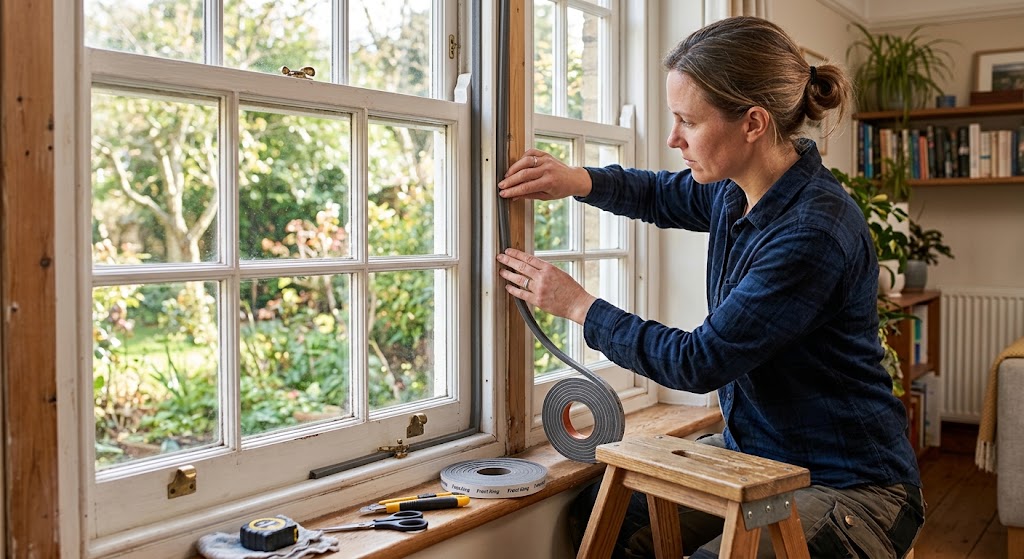
Why Weatherstripping Matters
Upgrading weatherstripping is a low-cost way to reduce energy loss and drafts around windows, helping regulate indoor temperatures and easing the strain on your HVAC system. Beyond energy savings, it also helps decrease noise from outside and generally improves home comfort, small upgrade, but a meaningful one over a full winter or summer.
Choosing the Right Material: Felt, Foam & Tubular
The right weatherstripping material depends on your window’s location, how it’s used, and how much you care about appearance. Felt is a common option, inexpensive but not especially effective or long-lasting. Foam options like neoprene or vinyl are more durable and offer a higher energy efficiency rating, holding up better to repeated compression as a window opens and closes.
Tubular or V-strip weatherstripping is another strong choice, using a narrow sponge rubber or silicone tube mounted on a metal or wood strip. It tends to create a tighter seal than felt while remaining relatively easy to install. Our casement window replacement options rely on this kind of compression seal for their signature airtight fit.
How to Install Weatherstripping
Once you’ve chosen your weatherstripping material, cut it to size using scissors or a putty knife. Push the barbed tongue into one end of the mounting slot, then carefully pull the strip out a couple of inches at a time to gauge the correct length before fully seating it. Repeat the process on the opposite side of the window if needed, checking that the seal is even and the window still opens and closes smoothly once the new strip is in place.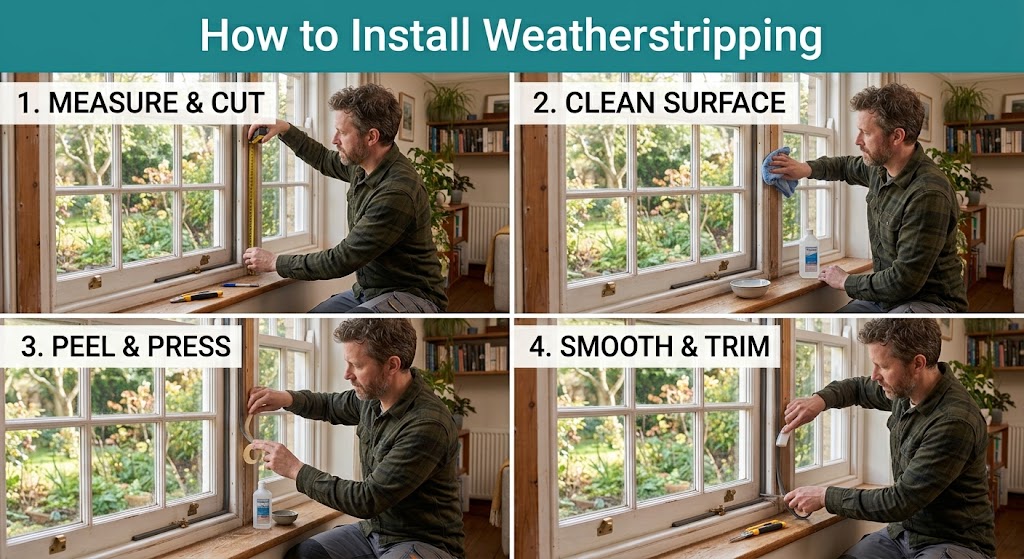
Sealing Gaps with Caulk
Weatherstripping addresses the moving parts of a window, but the surrounding frame also needs to be properly sealed to the structure using materials like caulk and gaskets. These fill any gaps between the window and the surrounding wall, ensuring the window is fully integrated into the building envelope. Unsealed gaps let outdoor air infiltrate the home, forcing your HVAC system to work harder and driving up energy costs. Our Window Installation Tolerances guide covers this sealing process in more technical depth, relevant if you’re evaluating whether an existing window was installed correctly in the first place.
When to DIY vs. Call a Professional
Weatherstripping and basic caulking are reasonable DIY projects for most homeowners, and a good first step if your windows are otherwise in good shape but drafty. If you’re finding that weatherstripping alone doesn’t solve the problem, or if the underlying frame shows signs of damage or an installation issue, it may be time to consider a full window replacement instead. Our Save Money on Replacement Windows guide covers other ways to reduce project costs if replacement turns out to be the better long-term fix, and our Window Maintenance Tips guide covers broader upkeep to keep your windows performing well.
Not sure whether weatherstripping or full replacement is right for your windows? Schedule a free consultation with our Salt Lake City team for a free quote. Explore our window replacement services in Salt Lake City if it’s time for an upgrade. You can also check out our business profile and reviews from other Salt Lake City homeowners.