
Triple-pane windows cost more than double-pane upfront, and understanding triple pane window ROI, how long it actually takes to recoup that cost in energy savings, helps you decide whether the upgrade is worth it for your home. Our energy-efficient window solutions are available in both double and triple-pane options to compare directly.
The Real Cost Premium of Triple-Pane
Triple-pane windows add a third layer of glass and an additional insulated gap compared to standard double-pane construction, and that extra material and manufacturing complexity shows up directly in the price. Triple-pane windows are meaningfully more expensive per unit than double-pane, and the price gap only grows on a whole-house replacement project with many windows. For a fuller comparison of the two options beyond cost alone, see our Double Pane vs. Triple Pane Windows guide.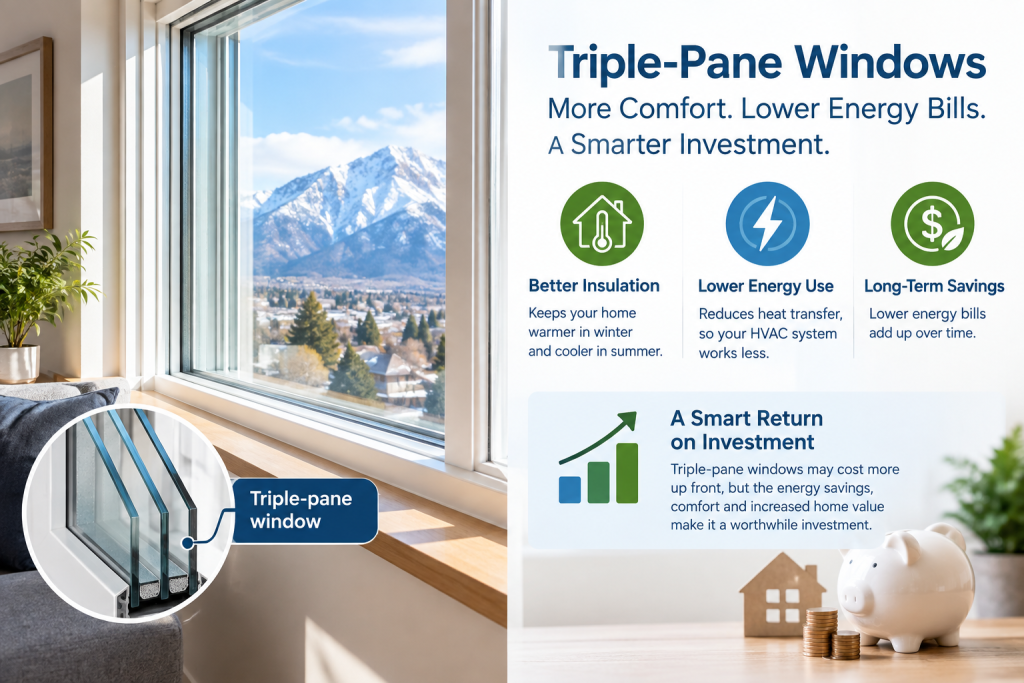
Calculating the Payback Period
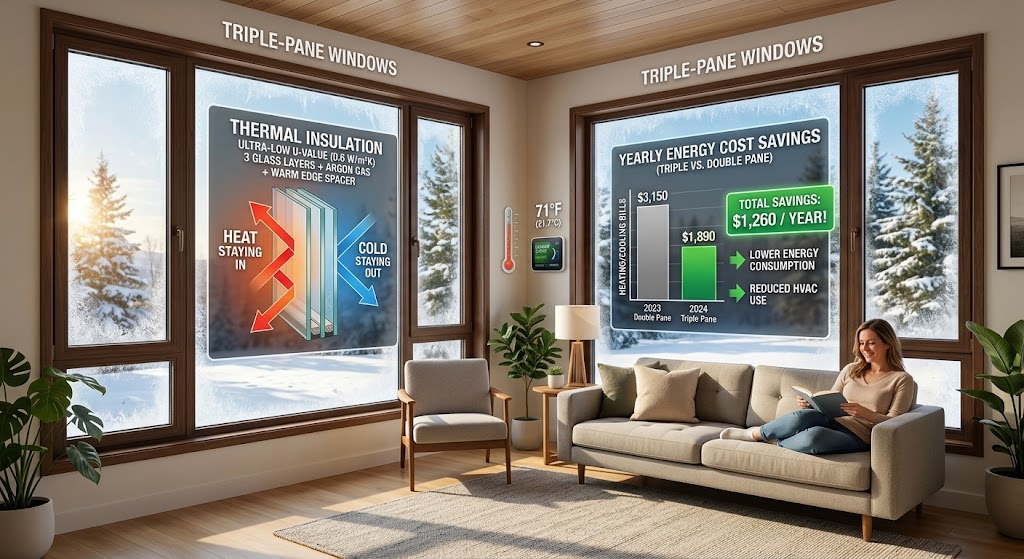
The payback period is the time it takes for cumulative energy savings to equal the extra upfront cost of triple-pane over double-pane. For many homes, this can take 20 years or more, a genuinely long horizon, especially when weighed against a window’s typical replacement cycle. This doesn’t mean triple-pane is a bad investment, but it does mean the financial case alone isn’t always as strong as marketing materials sometimes suggest.
The actual payback period varies significantly based on your local climate, energy costs, and how much of the price difference is actually attributable to the extra pane versus other upgraded features bundled into a premium product. Our Replacement Window Cost Factors guide covers the broader set of variables that affect what you’ll actually pay.
When Triple-Pane Makes Financial Sense
Triple-pane’s financial case strengthens in a few specific situations: extreme climates with large heating or cooling loads, homes where utility rates are unusually high, or projects that qualify for meaningful rebates or tax credits that offset the upfront premium. Our Utah Window Replacement Rebates Explained guide covers current Utah rebate programs that can shorten the payback period for a qualifying project.
For a moderate climate and average energy costs, the pure financial return on triple-pane over a well-built double-pane window is often modest, worth knowing going in rather than expecting a fast payback.
Non-Financial Benefits Worth Considering
Energy savings aren’t the only reason homeowners choose triple-pane, noise reduction, more consistent indoor comfort near the window, and reduced condensation are all real benefits that don’t show up in a pure energy-savings payback calculation. If comfort and noise reduction matter to you independent of the energy math, triple-pane can be worth it even with a longer financial payback period. Our casement window replacement options offer particularly strong noise reduction thanks to their airtight, crank-sealed design.
Is Triple-Pane Worth It for Your Home?
Triple-pane window roi are a genuine upgrade, but the pure financial payback period is often longer than homeowners expect, sometimes 20 years or more depending on your climate and energy costs. If energy savings alone are your primary motivation, it’s worth running the numbers for your specific situation rather than assuming the upgrade pays for itself quickly. If comfort and noise reduction matter just as much, the calculation looks different.
Curious whether triple-pane windows make financial sense for your home? Schedule a free consultation with our Salt Lake City team for a free quote. You can also check out our business profile and reviews from other Salt Lake City homeowners.