
Fiberglass window manufacturing relies on a process called pultrusion, and understanding how it works explains why fiberglass windows perform the way they do, strong, lightweight, and resistant to rust and fading. Our full lineup of replacement windows includes fiberglass options built with this same manufacturing process.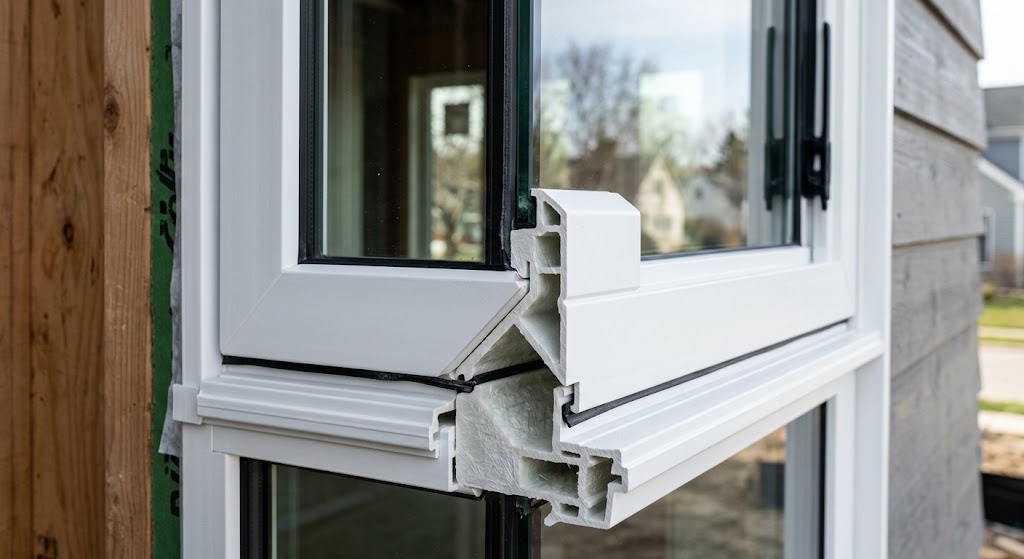
What Is Pultrusion?
Pultrusion is a manufacturing method that pulls continuous strands of fiberglass through a bath of liquid resin, then through a heated die that shapes and cures the material into a solid, rigid profile. The result is a composite material combining the tensile strength of fiberglass strands with the structural rigidity of the cured resin, formed into the exact frame shapes window manufacturers need.
Unlike molding processes that shape material in a single batch, pultrusion is a continuous process, strands and resin are pulled through the die in a steady stream, which produces highly consistent, uniform material along the entire length of the frame.
Why Pultruded Fiberglass Is So Strong
The strength of a pultruded fiberglass window frame comes from the orientation of the fiberglass strands themselves, running the full length of the profile rather than being randomly oriented. This gives the material excellent strength along its length, resisting bending and warping better than many alternative frame materials. It’s also lightweight relative to its strength, and it doesn’t rust or corrode the way some metal frame materials can over time. Our vinyl window replacement options in Salt Lake City offer a lower-cost alternative worth comparing against fiberglass for your project.
Polyester vs. Epoxy Resin
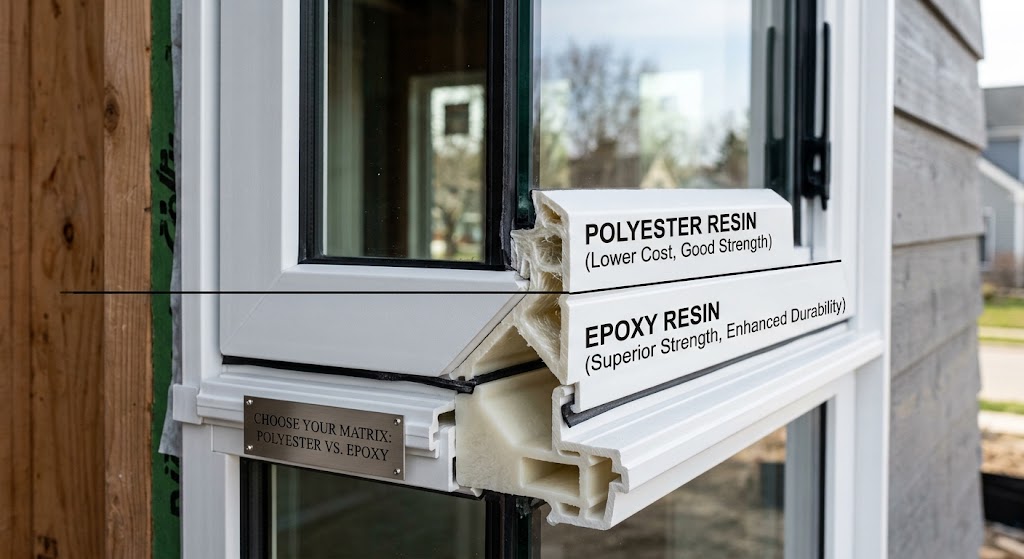
The resin used in pultrusion is typically either polyester or epoxy, and the choice affects the final product’s cost and performance characteristics. Polyester resin is more common and generally less expensive, offering solid performance for most residential window applications. Epoxy resin tends to offer somewhat better strength and chemical resistance, sometimes used in premium window lines, though at a higher manufacturing cost.
Neither option is inherently “better” across the board, the right choice depends on the specific performance and cost balance a manufacturer is targeting for a given product line.
How Manufacturing Affects Window Performance
Because pultruded fiberglass doesn’t expand and contract with temperature nearly as much as vinyl or aluminum, it holds its shape and seal integrity better across Salt Lake City’s wide seasonal temperature swings. This dimensional stability is a direct result of the manufacturing process itself, not just the raw material, poorly manufactured fiberglass can still underperform, which is part of why manufacturing quality matters as much as the material choice. Our Window Styles Guide guide covers how fiberglass compares to vinyl, wood, and aluminum frame materials more broadly.
Choosing Quality Fiberglass Windows
Understanding pultrusion helps explain why fiberglass windows carry the reputation they do for strength and low maintenance, it’s a manufacturing process specifically suited to producing a consistent, dimensionally stable frame material. For a deeper look at how other frame materials compare on energy performance specifically, see our [Aluminum vs. Wood Windows: Energy Efficiency Compared] guide, and our Vinyl Window Construction & Weather Performance guide for how vinyl manufacturing compares.
Curious about the quality behind your fiberglass window manufacturing? Schedule a free consultation with our Salt Lake City team for a free quote. You can also check out our business profile and reviews from other Salt Lake City homeowners.